
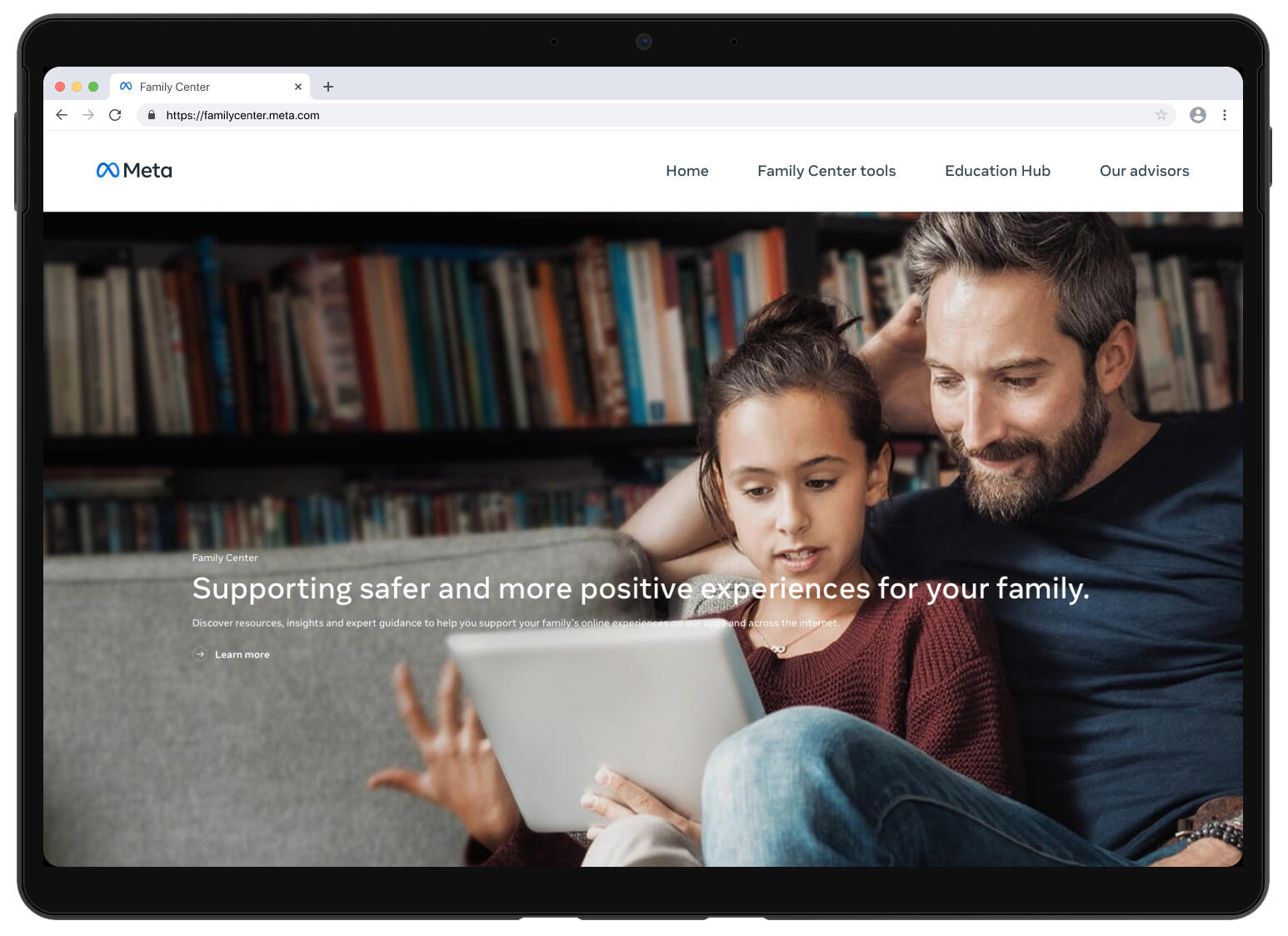
Designing Digital Safety Resources for a Global Audience
Meta Family Center is a global platform designed to help families navigate their online experiences through resources focused on digital well-being, safety, and privacy.The challenge was creating an experience that could make complex guidance easier to understand while supporting different levels of digital literacy, languages, cultures, and devices.
Design Lead | 2022 - 2023
As Design Lead, I helped shape the interaction and visual experience across desktop, tablet, and mobile web while developing reusable patterns that could support localization and continued global expansion.
Opportunity
How might we empower families around the world to manage their online experiences through clear, accessible digital guidance?
Research showed that families came to the experience with very different levels of digital literacy. They were looking for clearer guidance around digital well-being, online safety, and privacy, while language and cultural differences created additional barriers to finding resources that felt relevant and understandable.Those needs shaped our approach from the beginning. Rather than designing around a single audience or market, we needed an experience that was clear enough to understand, flexible enough to localize, and structured enough to scale.
Making Complex Guidance Easier to Navigate
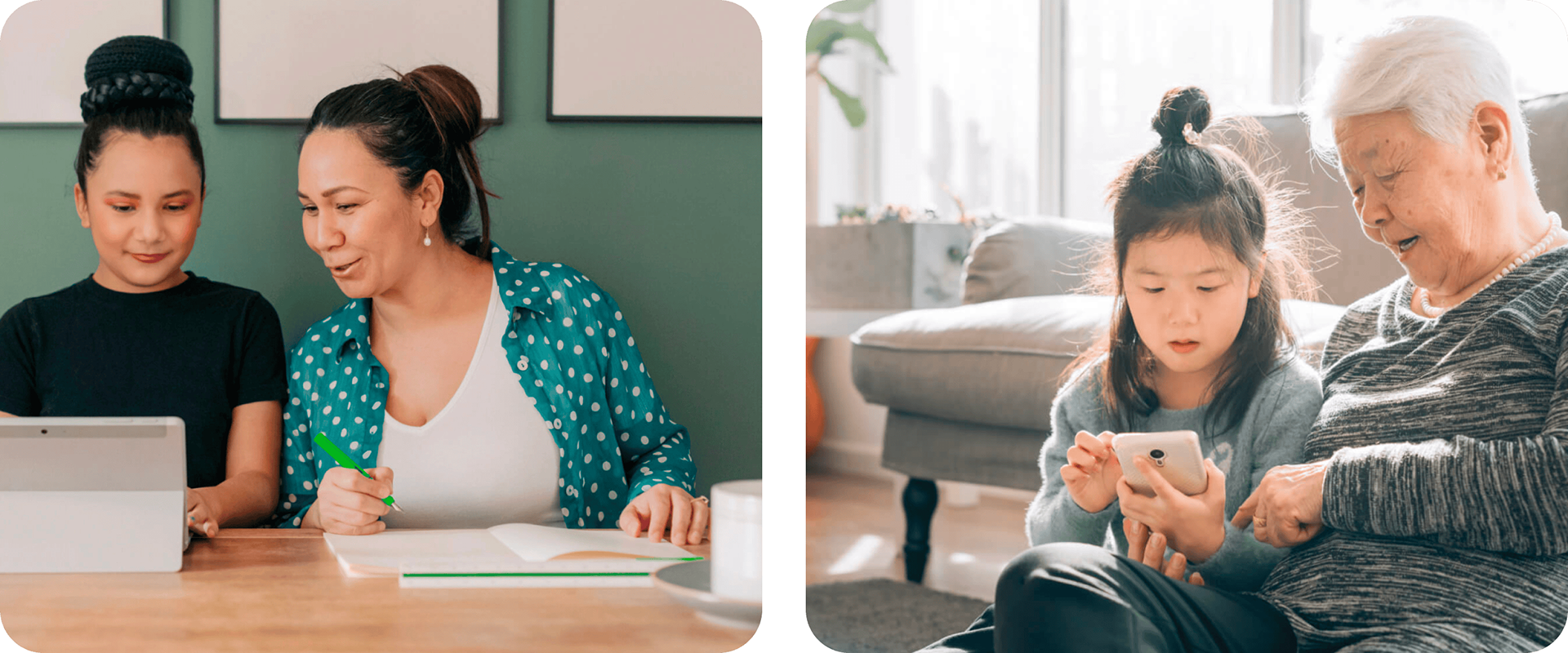
Digital safety can quickly become overwhelming particularly when people have different levels of familiarity with the subject.We focused on clear information hierarchies, step-by-step guidance, and progressive disclosure to make complex topics easier to navigate without presenting everything at once. The goal wasn't simply to organize information. It was to help families find the level of guidance they needed and move through it with greater confidence.
Designing for a Global Audience
Localization couldn't be something we considered only after finishing the English-language experience.We created reusable templates and flexible content patterns that could support multilingual content as Family Center expanded into additional markets. This meant thinking beyond individual screens and considering how the experience could remain understandable and consistent even as the content and language changed.The project expanded my definition of scale. A scalable experience isn't simply one that supports more content or users. It also needs to adapt without losing clarity.
Building a System That Could Evolve
Because Family Center needed to support a wide range of educational resources, designing every page independently wouldn't have been sustainable.We developed modular patterns that could be reused across different types of content while maintaining consistency throughout the experience. This gave the platform enough structure to feel cohesive while providing flexibility for new resources and content over time.The work pushed me to think less about individual pages and more about the underlying system connecting them.


Designing Through Technical Constraints
The design work was also happening alongside an accelerated platform transition which introduced additional technical and content constraints.I worked closely with Engineering and project partners to adapt the experience as the underlying systems changed while maintaining consistency across responsive layouts and Meta's broader design system. External content also needed to fit into the experience without making Family Center feel fragmented.These constraints made collaboration between Design, Engineering, and content partners especially important. The challenge wasn't simply getting designs shipped. It was preserving the quality and consistency of the experience while the platform underneath it was evolving.
From MVP to Global Rollout
Family Center went through multiple rounds of iteration before reaching a shippable MVP with the experience continuing to evolve as it expanded.What began with a more focused release eventually grew into a global platform making resources around digital well-being, safety, and privacy available to families across different markets and languages.


Outcome
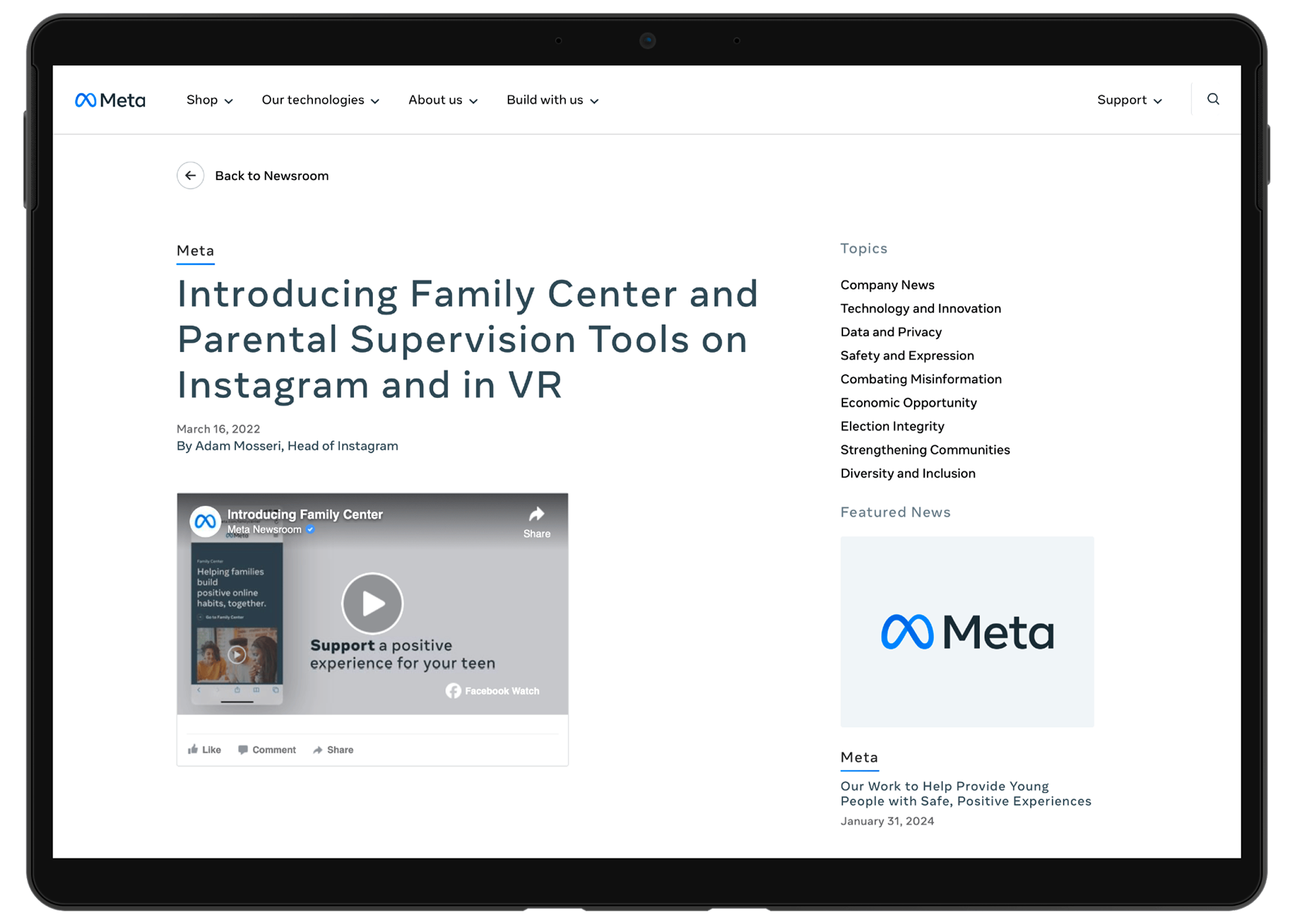
Family Center reached approximately 500,000 visitors within its first week, 1 million within its first month, and 10 million by mid-2022. The experience continued expanding internationally and was available globally by early 2023.For me, that scale reinforced the importance of designing systems that could continue working as the audience, content, languages, and product evolved.
How This Shaped My Approach
Family Center expanded how I thought about designing for scale. Scale isn't only about supporting more users or adding more features. It can also mean creating an experience flexible enough to accommodate different languages, levels of digital literacy, content needs, and technical constraints without losing clarity.It also strengthened my systems thinking. Instead of approaching each screen as an isolated design problem, I became more deliberate about creating patterns that could continue working as the product, content, and audience evolved.
©2026 • Elliot Yamashiro